Choosing Your Wedding Flower Color Palette
Your wedding flowers are the quiet storytellers of your day. They set the mood, frame your memories, and bring personality to every space. A carefully chosen color palette can elevate your arrangements from beautiful to unmistakably intentional—layered, cohesive, and effortlessly elegant.
Start with the color that feels most like you—the deep crimson of your grandmother’s roses, a soft blush from your first-date flowers, or a shade that simply makes your heart lift. Once you’ve identified that anchor shade, build outward with purpose.
If you begin with a deep crimson, consider adding tones like blackberry, merlot, or wine to enrich the palette. Balance these with softer hues such as dusty rose, mauve, or champagne to create dimension. Introduce textural neutrals—antique beige, taupe, or soft ivory—to keep the palette sophisticated and grounded. The same approach applies to any starting color: choose one or two supporting tones that echo its mood, then add muted neutrals to create cohesion. This approach ensures the palette feels rich and harmonious without ever appearing overworked.
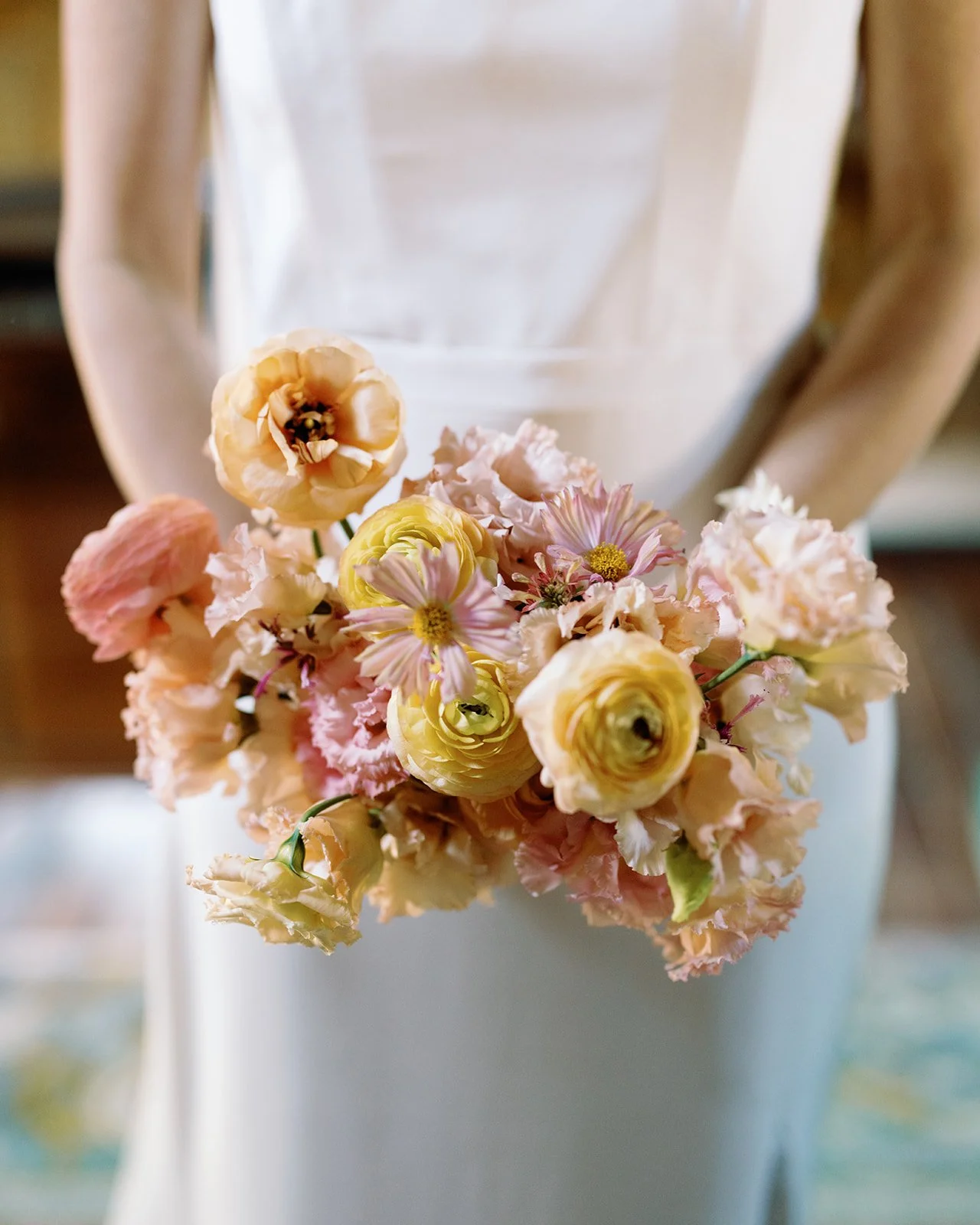
Luxury in floral design is all about flow. Colors should move naturally through bouquets, centerpieces, and installations, creating rhythm rather than random pops. For a bold starting hue like crimson, you might let the darker tones anchor the ceremony arrangement while allowing the softer blushes and neutrals to open up the reception tablescape. If your palette begins with a softer shade—like blush or pale peach—consider weaving in warm undertones such as apricot, rosewater, or soft caramel to avoid a washed-out look and to maintain visual depth across the day.
Consider the bigger picture—how your flowers will interact with your wedding party’s attire, your table linens, your venue materials, and the surrounding season. A crimson-based palette feels at home in autumn settings with warm wood or candlelight, while a blush-centered palette pairs beautifully with spring or early-summer environments. Let these contextual cues guide you: they help ensure your color selections don’t just look beautiful in isolation but feel authentically connected to your celebration.
When every element is considered, your flowers don’t just decorate the day—they become part of its story.